

Sciatica is one of the most common pain conditions seen in primary care — and in the majority of cases, it resolves without surgery. But "wait and see" is not a strategy. What you do at home during those first weeks matters enormously: the right stretches, the right positioning, and the right pain management techniques can shorten your recovery and prevent a mild episode from becoming a chronic problem. This guide covers the most effective self-care approaches, organized by what works best at each stage of recovery.

What the Research Says About Self-Management
A 2015 systematic review and meta-analysis (Fernandez et al.) compared structured exercise with advice to stay active in the management of sciatica and found that structured exercise produced better outcomes — particularly for pain and disability — than general advice alone (PMID: 26165218).
A 2012 randomized clinical trial (Albert & Manniche) demonstrated that systematic active conservative treatment — combining specific exercises, patient education, and graded activity — significantly improved outcomes for patients with severe sciatica compared to symptom-based management (PMID: 21494193).
The message is clear: active self-care beats passive waiting.
What Is Sciatica?
Sciatica describes pain that follows the path of the sciatic nerve — from the lower back through the buttock and down the back of the leg. Common causes include:
- Herniated lumbar disc — the most frequent cause in younger adults
- Spinal stenosis — more common in older adults
- Piriformis syndrome — the piriformis muscle compresses the nerve in the buttock
- Degenerative disc disease — age-related changes reduce space around the nerve
For a complete overview, see our sciatica condition page.
Home Remedy 1: Targeted Stretching
Stretching is the foundation of sciatica home care. The key is choosing the right stretches for your specific situation and performing them consistently — ideally twice daily.
Piriformis Stretches
The piriformis muscle sits deep in the buttock, directly over the sciatic nerve. When this muscle is tight or inflamed, it can compress the nerve and produce sciatica symptoms — even without a disc problem.
Supine Piriformis Stretch
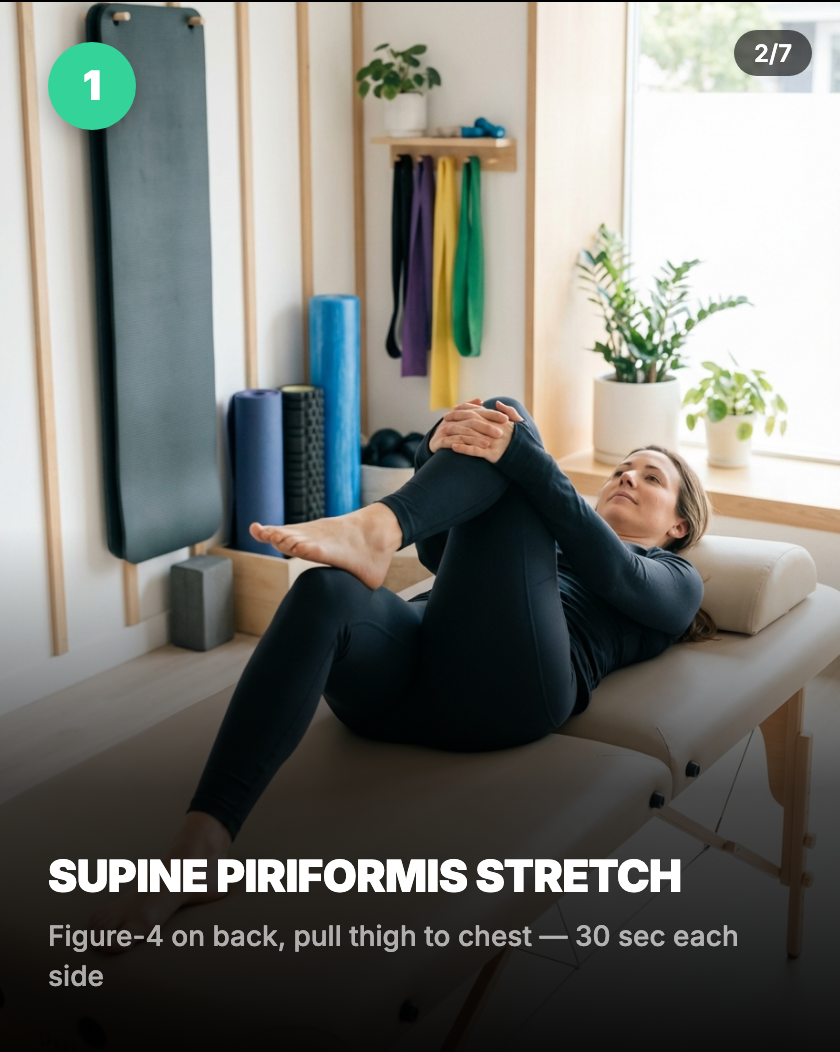
- Lie on your back with both knees bent.
- Cross your right ankle over your left knee in a figure-4 position.
- Pull your left thigh toward your chest until you feel a deep stretch in the right buttock.
- Hold for 30 seconds each side. Repeat 2–3 times.
Seated Piriformis Stretch
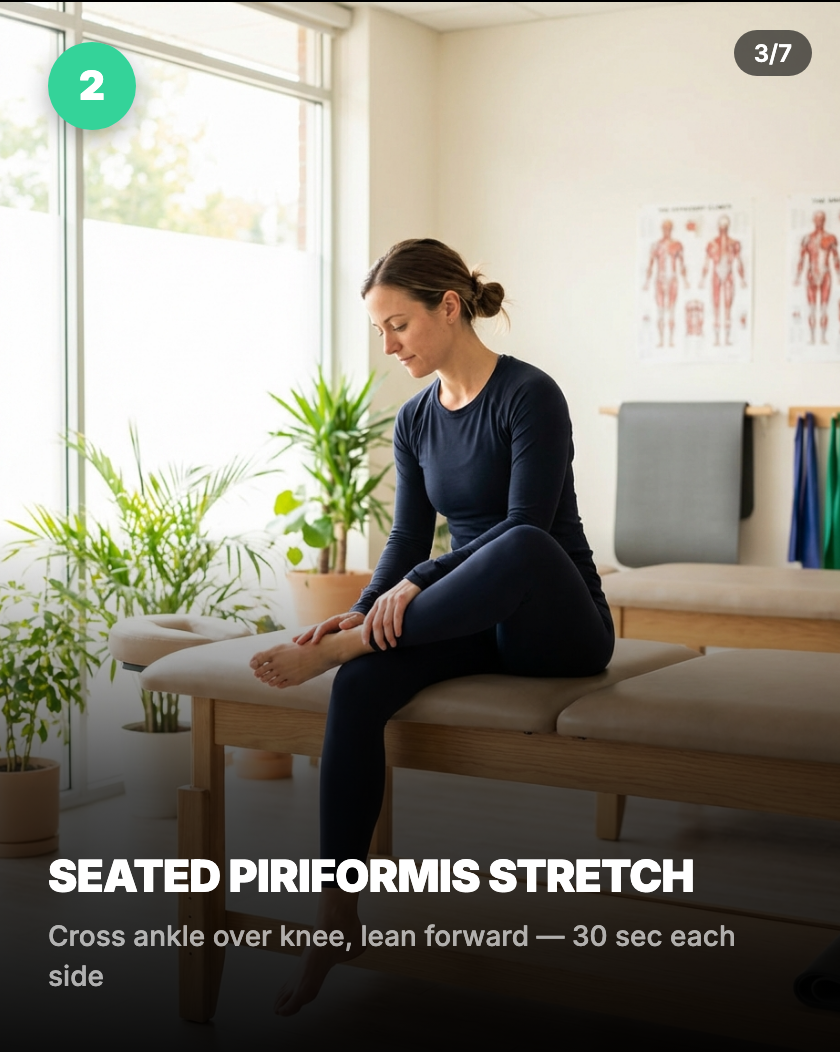
- Sit on the edge of a chair or bed.
- Cross one ankle over the opposite knee.
- Lean forward gently from the hips until you feel the stretch in your buttock.
- Hold for 30 seconds each side. Repeat 2–3 times.
Tennis Ball Release
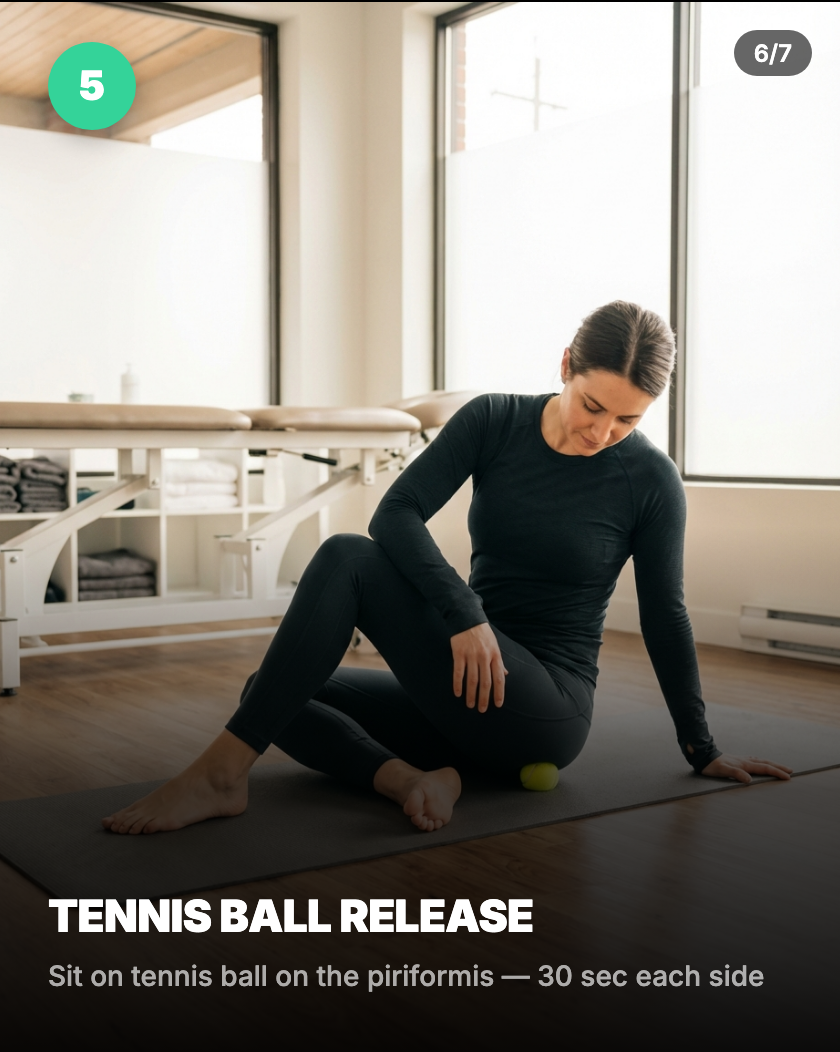
- Sit on the floor with a tennis ball positioned under the affected buttock.
- Lean your weight onto the ball, finding the tender spot.
- Hold still or make small rocking movements for 30 seconds each side.
This self-myofascial release technique can help reduce piriformis tension and complement stretching.
Home Remedy 2: Heat and Ice Therapy
When to use ice (first 48–72 hours) Apply an ice pack wrapped in a thin towel to the lower back or buttock for 15–20 minutes. Ice reduces inflammation around the irritated nerve root. Use every 2–3 hours during the acute phase.
When to use heat (after 72 hours) Switch to a heating pad or warm compress on the lower back and buttock. Heat increases blood flow, relaxes tight muscles, and helps the surrounding tissue recover. Use for 15–20 minutes before stretching for the best effect.
Alternating heat and ice Some people find contrast therapy — alternating between ice (10 minutes) and heat (10 minutes) — provides better relief than either alone. Experiment to find what works for you.
Home Remedy 3: Sleep Positioning
Night-time sciatica is common because hours of lying still can stiffen the muscles around the nerve and allow spinal discs to rehydrate and swell. Proper positioning can reduce pain and improve sleep quality.

Best sleeping positions for sciatica:
- Side-lying with a pillow between the knees — this keeps the hips, pelvis, and spine aligned and reduces strain on the piriformis
- On your back with a pillow under the knees — this takes tension off the lower back by slightly flexing the lumbar spine
- Avoid sleeping on your stomach — this forces the lumbar spine into extension, which can aggravate disc-related sciatica
Before-bed stretching routine: Performing a short stretching routine before bed can improve sleep quality. Consider these gentle evening stretches:
- Supine piriformis stretch (30 seconds each side)
- Knee-to-chest hug (30 seconds each side)
- Lying spinal twist (30 seconds each side)
For a complete before-bed routine, see our guide on sleeping with sciatica.
Home Remedy 4: Walking
Walking is one of the most underrated sciatica treatments. It provides gentle, rhythmic movement that:
- Promotes blood flow to the lower back and legs
- Releases natural endorphins that reduce pain perception
- Prevents the deconditioning that comes from too much rest
- Gently mobilizes the sciatic nerve with each step
A 2023 Delphi consensus study (Thoomes et al.) on conservative management of lumbar radiculopathy found that walking and staying active were consistently recommended across all stages of the condition — acute, sub-acute, and chronic (PMID: 36205564).
How to walk with sciatica:
- Start with short walks — even 5–10 minutes counts
- Walk on flat, even surfaces
- Maintain a comfortable pace — no need to power walk
- Increase duration by 5 minutes every few days as tolerated
- If standing makes symptoms worse (common in spinal stenosis), try walking with a slight forward lean or use a shopping cart for support
Home Remedy 5: Posture and Positioning Throughout the Day
How you sit and stand during the day has a cumulative effect on your sciatic nerve. Small adjustments can make a significant difference:
Sitting:
- Use a firm chair with lumbar support — or place a small rolled towel behind your lower back
- Keep both feet flat on the floor with knees at roughly 90 degrees
- Avoid crossing your legs — this rotates the pelvis and can compress the piriformis
- Stand up and move every 30–45 minutes
Standing:
- Distribute weight evenly between both feet
- Avoid locking your knees
- If standing for long periods, place one foot on a low step or footrest to reduce lumbar strain
Driving:
- Move the seat forward enough that your knees are slightly higher than your hips
- Place a lumbar roll behind your lower back
- Stop every 30–60 minutes on long drives to walk and stretch
Home Remedy 6: Anti-Inflammatory Nutrition
While no food will cure sciatica, reducing systemic inflammation can support recovery:
- Omega-3 fatty acids — found in fatty fish, walnuts, and flaxseeds
- Turmeric and ginger — natural anti-inflammatory compounds
- Leafy greens and berries — rich in antioxidants that reduce oxidative stress
- Adequate hydration — spinal discs depend on water for proper cushioning
Avoid foods that promote inflammation: processed foods, excess sugar, and refined carbohydrates.
When Home Remedies Are Not Enough
A 2021 randomized controlled trial (Fritz et al.) found that early referral to physical therapy for acute sciatica led to greater improvements in disability compared to primary care management alone (PMID: 33017565). Consider professional help if:
- Pain persists beyond 4–6 weeks despite consistent home care
- Symptoms are worsening rather than gradually improving
- You experience sudden weakness in the leg or foot
- Loss of bladder or bowel control — seek emergency care immediately
- Numbness is progressive — spreading or worsening over days
A 2025 network meta-analysis (Zhu et al.) examining 50 randomized controlled trials confirmed that exercise combined with neural mobilization and physical therapy produced some of the strongest outcomes for chronic sciatica — suggesting that professional guidance alongside home care is the optimal strategy (PMID: 40373933).
Recovery Timeline
With consistent home care, most sciatica episodes follow this pattern:
- Days 1–7: Acute pain. Use ice, gentle positioning, and very short walks. Avoid sitting for long periods.
- Weeks 1–3: Pain begins to ease. Introduce stretching, heat therapy, and increase walking duration.
- Weeks 3–6: Significant improvement. Add strengthening exercises and resume normal activities gradually.
- Weeks 6–12: Full recovery for most cases. Maintain a preventive stretching routine.
For exercise guides tailored to each stage, see our sciatica exercises page. For bed-based routines during the acute phase, visit sciatica exercises in bed.
Summary
The most effective home remedies for sciatica combine active approaches — targeted stretching, walking, and posture correction — with supportive measures like heat and ice, sleep positioning, and anti-inflammatory nutrition. Passive rest alone is not recommended. Start gently, stay consistent, and recognize when professional guidance is needed. Most sciatica resolves within weeks, and what you do at home during that time shapes how quickly and completely you recover.