

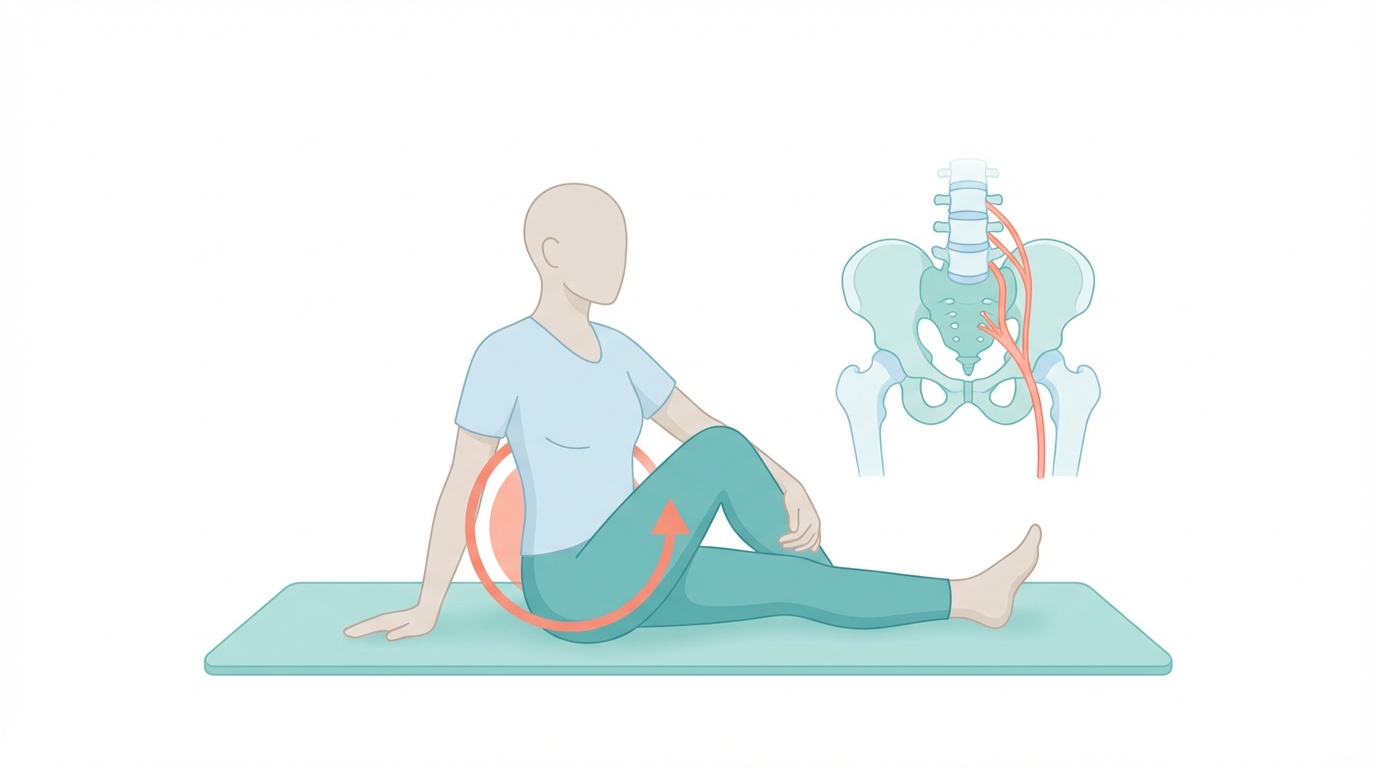
What Is Sciatica Treatment?
Sciatica treatment refers to the range of interventions used to relieve pain, numbness, and weakness caused by irritation or compression of the sciatic nerve. Treatment approaches vary depending on the underlying cause, severity of symptoms, and how long the condition has persisted.
Most people with sciatica recover with conservative (non-surgical) management. A 2024 systematic review and meta-analysis found that conservative treatment was associated with significant reductions in leg pain and improvements in physical and mental health scores compared to surgical intervention for chronic sciatica lasting more than three months (PMID: 38832179). Current clinical guidelines consistently recommend conservative care as the first-line approach for most patients.

This guide covers the most widely used and evidence-supported sciatica treatments, organized from least to most invasive, so you can understand the full range of options available.
What Causes Sciatica?
Understanding the cause of your sciatica is essential for selecting the right treatment. The sciatic nerve — the longest and thickest nerve in the body — runs from the lower back through the buttock and down the back of each leg. When something compresses or irritates this nerve, it produces the characteristic radiating pain known as sciatica.
The most common causes include:
- Lumbar disc herniation — A bulging or ruptured disc presses on a nerve root, accounting for roughly 85% of sciatica cases
- Spinal stenosis — Narrowing of the spinal canal compresses nerve structures, most common in adults over 60
- Piriformis syndrome — The piriformis muscle in the buttock spasms or tightens, compressing the sciatic nerve beneath it
- Degenerative disc disease — Age-related disc degeneration reduces disc height and may irritate adjacent nerves
- Spondylolisthesis — A vertebra slips forward over the one below it, narrowing the space around the nerve
Risk factors that increase the likelihood of developing sciatica include prolonged sitting, obesity, physically demanding occupations involving heavy lifting, diabetes, and smoking (PMID: 36514653). Identifying and addressing these risk factors is an important part of both treatment and prevention.
Conservative Treatment: Physical Therapy and Exercise
Physical therapy is the cornerstone of conservative sciatica treatment. A structured rehabilitation program typically combines manual therapy, therapeutic exercise, and patient education to reduce pain, improve function, and prevent recurrence.
Why Physical Therapy Works
A randomized controlled trial published in the Annals of Internal Medicine found that early physical therapy referral for patients with acute back pain and sciatica resulted in significantly greater improvement at six months compared to usual care alone (PMID: 33017565). The physical therapy group received a program that included exercise, manual therapy techniques, and progressive functional activities.
Physical therapy for sciatica typically includes:
- Directional preference exercises — Movements based on the McKenzie Method that help centralize pain (move it from the leg back toward the spine), which is generally a positive sign
- Neural mobilization — Gentle nerve gliding exercises designed to help the sciatic nerve move more freely through surrounding tissues
- Core stabilization — Strengthening exercises for the deep abdominal and spinal muscles that support lumbar stability
- Manual therapy — Hands-on techniques including spinal mobilization and soft tissue work to reduce pain and improve mobility
For a detailed guide to specific exercises, see our article on the best exercises for sciatica.
Staying Active
Clinical practice guidelines consistently advise patients with sciatica to remain active rather than rest in bed. Gentle walking, swimming, and modified daily activities can promote circulation, reduce stiffness, and prevent the deconditioning that often accompanies prolonged inactivity. The goal is not to push through severe pain but to maintain a tolerable level of movement throughout recovery.
Medication-Based Treatment
Medication may be used alongside physical therapy to manage sciatica symptoms, particularly during acute flare-ups. No single medication has been shown to resolve sciatica on its own, but several options may provide short-term relief.
Over-the-Counter Options
- NSAIDs (ibuprofen, naproxen) — Non-steroidal anti-inflammatory drugs are often the first medication recommended for sciatica pain. They can help reduce inflammation around the nerve root and provide temporary pain relief
- Paracetamol (acetaminophen) — May offer modest pain relief, though evidence for its effectiveness in sciatica specifically is limited
Prescription Medications
- Oral corticosteroids — Short courses of oral steroids may reduce acute inflammation and nerve irritation, though their benefit in sciatica remains debated
- Neuropathic pain agents (gabapentin, pregabalin) — These medications target nerve pain specifically and may be considered when standard painkillers are insufficient. Evidence for their use in sciatica is mixed
- Muscle relaxants — May provide short-term relief when significant muscle spasm accompanies sciatica symptoms
It is important to use medications at the lowest effective dose for the shortest necessary duration. All medication decisions should be made in consultation with a healthcare provider who understands your complete medical history.
Epidural Steroid Injections
When conservative measures provide insufficient relief, epidural steroid injections (ESIs) may be considered. These injections deliver corticosteroid medication directly into the epidural space surrounding the spinal nerves, aiming to reduce inflammation at the site of nerve compression.
ESIs are typically considered when:
- Pain remains severe after 4–6 weeks of conservative treatment
- Symptoms significantly limit daily function and sleep
- The patient wants to avoid or delay surgical intervention
A 2023 BMJ systematic review comparing surgical and non-surgical treatments noted that epidural steroid injections were among the non-surgical interventions studied, though their long-term benefits remain uncertain (PMID: 37076169). ESIs may provide meaningful short-term relief for some patients, but they are generally not considered a standalone cure. Most clinicians recommend continuing with physical therapy alongside injection-based treatment.
When Surgery May Be Needed
Surgery is typically reserved for patients who have not responded to several months of conservative treatment, or who present with progressive neurological deficits. The most common surgical procedure for disc-related sciatica is a microdiscectomy, which involves removing the portion of disc material compressing the nerve.
Indications for Surgery
- Cauda equina syndrome — Loss of bowel or bladder control, saddle area numbness, or progressive bilateral leg weakness requires emergency surgery
- Progressive motor weakness — Worsening muscle strength in the affected leg despite conservative care
- Severe, unrelenting pain — Pain that remains debilitating after 6–12 weeks of appropriate non-surgical treatment
- Significant functional limitation — Inability to perform essential daily activities despite comprehensive conservative management
What the Evidence Says
The 2023 BMJ systematic review found that discectomy was associated with greater short-term reductions in leg pain and disability compared to non-surgical treatment in patients with a surgical indication. However, the differences between surgical and conservative outcomes tended to decrease over time, with many conservatively managed patients achieving similar results by 12–24 months (PMID: 37076169).
This suggests that for many patients, surgery may accelerate recovery rather than change the long-term outcome. The decision to proceed with surgery should weigh the severity of symptoms, the patient's functional needs, and their preferences after a thorough discussion with their treating clinician.
What to Avoid During Treatment
Certain activities and approaches can worsen sciatica symptoms or slow recovery. Be cautious with:
- Prolonged bed rest — Resting beyond a day or two can lead to muscle deconditioning, increased stiffness, and slower recovery. Guidelines consistently recommend staying active
- Heavy lifting and loaded forward bending — Exercises like deadlifts, bent-over rows, or toe touches can increase disc pressure and nerve irritation
- Aggressive stretching — Forceful hamstring stretches can increase tension on the sciatic nerve and peripheralize symptoms. See our guide on exercises to approach carefully
- High-impact activities — Running, jumping, and contact sports should be avoided until acute symptoms have settled
- Ignoring worsening symptoms — If pain spreads further down the leg (peripheralization) during any activity, stop and reassess
If you are also managing other lower limb conditions, such as plantar fasciitis, coordinate your rehabilitation so that treatments do not conflict or overload recovering structures.
Recovery Timeline
Recovery from sciatica varies significantly depending on the cause, severity, and treatment approach. Here is a general timeline for the most common presentations:
Acute Sciatica (Disc Herniation)
- Weeks 1–2: Acute phase — focus on pain management, gentle movement, and avoiding aggravating activities
- Weeks 2–6: Subacute phase — progressive introduction of physical therapy exercises, nerve glides, and core stabilization
- Weeks 6–12: Recovery phase — gradual return to normal activities, continued strengthening, and functional rehabilitation
- 3–6 months: Most patients experience significant improvement or full resolution with conservative care
Chronic Sciatica (Symptoms Beyond 3 Months)
Chronic sciatica may require a longer, more comprehensive treatment approach. A combination of physical therapy, activity modification, and possibly injection therapy or surgery may be needed. Recovery is often measured in months rather than weeks, and the focus shifts toward functional improvement and pain management rather than complete symptom elimination.
After Surgery
- Weeks 1–2: Wound healing, gentle walking, movement within limits set by the surgeon
- Weeks 2–6: Progressive physical therapy begins, gradual increase in daily activities
- Weeks 6–12: Return to most normal activities, continued strengthening
- 3–6 months: Full recovery for most patients following microdiscectomy
Recovery is rarely linear. Expect fluctuations — some days will be better than others. Consistency with your rehabilitation program and communication with your treatment team are the strongest predictors of a good outcome.
FAQ
What is the most effective treatment for sciatica?
For most people, a combination of physical therapy, appropriate exercise, and short-term pain management is the most effective approach. Clinical guidelines recommend conservative treatment as the first line for sciatica, reserving surgery for cases with progressive neurological deficits or symptoms that do not improve after several months of non-surgical care.
How long does sciatica treatment take to work?
Most patients notice improvement within 4–8 weeks of starting conservative treatment. Physical therapy benefits tend to accumulate over time, with greater improvements seen at the 3- and 6-month marks. Epidural injections, when effective, may provide relief within days to two weeks. Surgical outcomes are often noticeable within the first few weeks post-procedure.
Can sciatica be cured permanently?
Many people experience full resolution of sciatica symptoms, particularly when the underlying cause is a disc herniation that heals over time. However, recurrence is possible, especially if risk factors like prolonged sitting, weak core muscles, or poor lifting mechanics are not addressed. A maintenance exercise program can significantly reduce the risk of future episodes.
Should I see a physiotherapist or a doctor first?
Either is a reasonable starting point. A doctor can help rule out serious conditions and may order imaging if needed. A physiotherapist can assess your movement patterns, identify the likely source of nerve irritation, and begin treatment immediately. In many healthcare systems, you can access a physiotherapist directly without a doctor's referral.
Is heat or ice better for sciatica?
Both can be helpful depending on the situation. Ice may reduce inflammation during the acute phase (first 48–72 hours), while heat can relax tight muscles and improve blood flow in subacute or chronic stages. Some patients find alternating between the two most effective. Neither is a standalone treatment — they work best alongside active rehabilitation.
When should I go to the emergency room for sciatica?
Seek emergency medical attention if you experience loss of bowel or bladder control, sudden numbness in the saddle area (inner thighs and groin), or rapid progressive weakness in one or both legs. These may indicate cauda equina syndrome, a rare but serious condition requiring urgent surgical intervention.
References
- Liu C, Ferreira GE, Abdel Shaheed C, et al. Surgical versus non-surgical treatment for sciatica: systematic review and meta-analysis of randomised controlled trials. BMJ. 2023;381:e070730. PMID: 37076169.
- Ezzat AM, Engelbrecht CJ, Ghulam H, et al. Surgical vs. Conservative Management of Chronic Sciatica (>3 Months) Due to Lumbar Disc Herniation: Systematic Review and Meta-Analysis. World Neurosurgery. 2024. PMID: 38832179.
- Fritz JM, Lane E, McFadden M, et al. Physical Therapy Referral From Primary Care for Acute Back Pain With Sciatica: A Randomized Controlled Trial. Annals of Internal Medicine. 2021;174(1):8-17. PMID: 33017565.
- Gimenez-Campos MS, Pimenta-Fermisson-Ramos P, Diaz-Cambronero JI, et al. Risk Factors, Prevention, and Primary and Secondary Management of Sciatica: An Updated Overview. Current Pain and Headache Reports. 2022;26(11):777-787. PMID: 36514653.
Looking for guided sciatica recovery? Join the RehabGuideHub early access list for structured rehabilitation programs built with physiotherapy expertise.