

Yoga has long been recommended as a complementary approach for back pain — but when sciatica is involved, not all poses are equally helpful, and some can make things worse. The key is choosing poses that gently mobilize the sciatic nerve, open the hips, and strengthen the stabilizing muscles around the spine without forcing flexion or compression. This guide walks you through the most effective yoga poses for sciatica, organized by intensity so you can match them to your current level of pain.

What the Research Says About Yoga and Sciatica
A 2026 randomized study (Bharti et al.) comparing structured yoga with conventional therapeutic exercise in 60 patients with chronic mechanical low back pain found that yoga produced significantly greater reductions in pain intensity (VAS reduction: 4.26 vs. 3.60, p = 0.007) and disability (ODI reduction: 21.7 vs. 17.2, p = 0.002) — while requiring less total exercise time per week (PMID: 41704964).
An earlier exploratory randomized controlled trial (Monro et al., 2015) specifically examined yoga therapy in patients with low back pain and sciatica — including those with confirmed disc extrusions and bulges — and found beneficial effects compared to normal medical treatment (PMID: 25271201).
A 2025 network meta-analysis (Xia et al.) evaluating mind-body exercises — including yoga, Tai Chi, and Qigong — for chronic nonspecific low back pain confirmed that these approaches offer meaningful improvements in pain scores, physical functioning, and quality of life (PMID: 40739731).
What Is Sciatica?
Sciatica describes pain that radiates along the sciatic nerve — from the lower back through the buttock and down the back of the leg. It is a symptom rather than a standalone diagnosis, typically caused by:
- Herniated lumbar disc — disc material presses against a nerve root
- Piriformis syndrome — the piriformis muscle in the buttock tightens around the nerve
- Spinal stenosis — narrowing of the spinal canal compresses the nerve
- Degenerative disc disease — age-related disc changes reduce space around the nerve
For a complete overview, see our sciatica condition page.
Gentle Yoga Poses for Sciatica
Start with these poses if you are in the acute or early recovery phase. They focus on gentle spinal mobilization and basic hip opening.
Cat-Cow (Marjaryasana-Bitilasana)
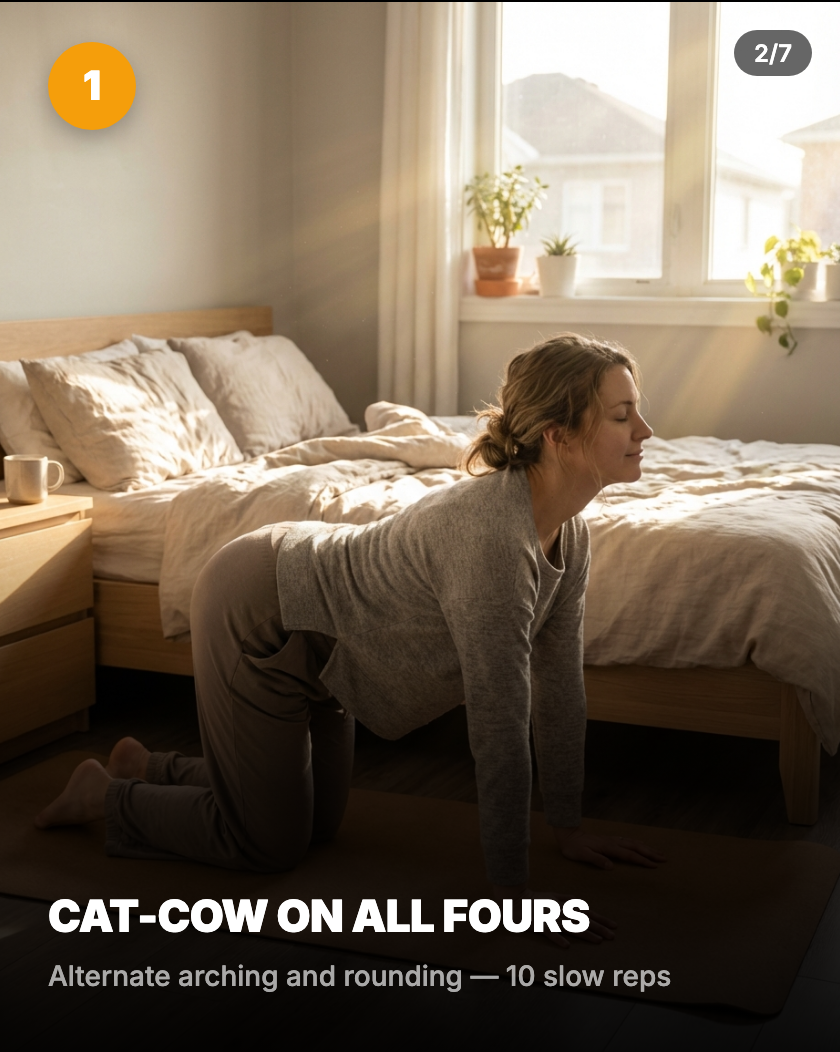
What it helps with Gently mobilizing the entire spine through flexion and extension, warming up the back muscles, and promoting fluid movement through the spinal discs.
How to do it
- Start on your hands and knees with wrists under shoulders and knees under hips.
- Cow: Inhale and drop your belly toward the floor, lifting your chest and tailbone.
- Cat: Exhale and round your spine toward the ceiling, tucking your chin and tailbone.
Repetitions 10 slow repetitions, moving with your breath. Perform as a warm-up before other poses.
When to stop Stop if either position increases leg pain or produces sharp sensations in the lower back.
Child's Pose (Balasana)
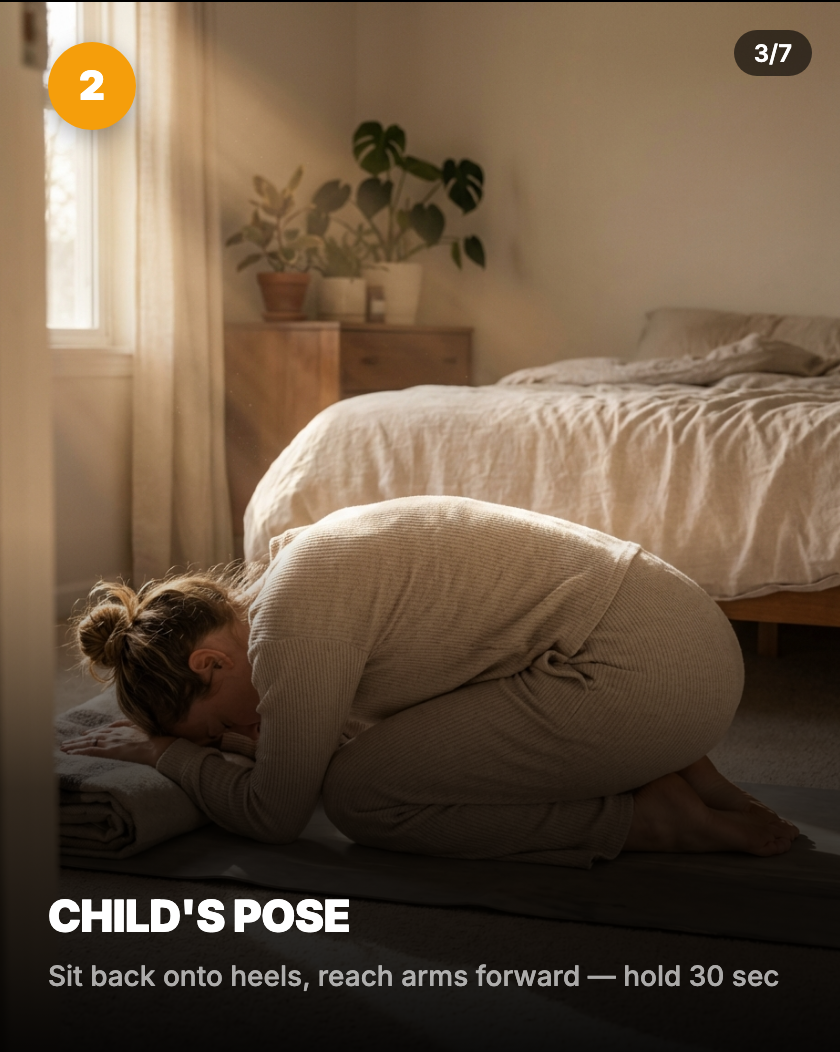
What it helps with Gently stretching the lower back, hips, and thighs while providing a restful position that decompresses the lumbar spine.
How to do it
- Kneel on your mat and sit back onto your heels.
- Walk your hands forward, lowering your chest toward the floor.
- Rest your forehead on the mat and let your arms extend in front of you.
Repetitions Hold for 30–60 seconds. Return to this pose between more active stretches as a resting position.
When to stop Stop if the position compresses the front of the hips or increases pain. If sitting fully onto your heels is uncomfortable, place a pillow between your thighs and calves.
Supine Figure-4 Stretch (Sucirandhrasana)
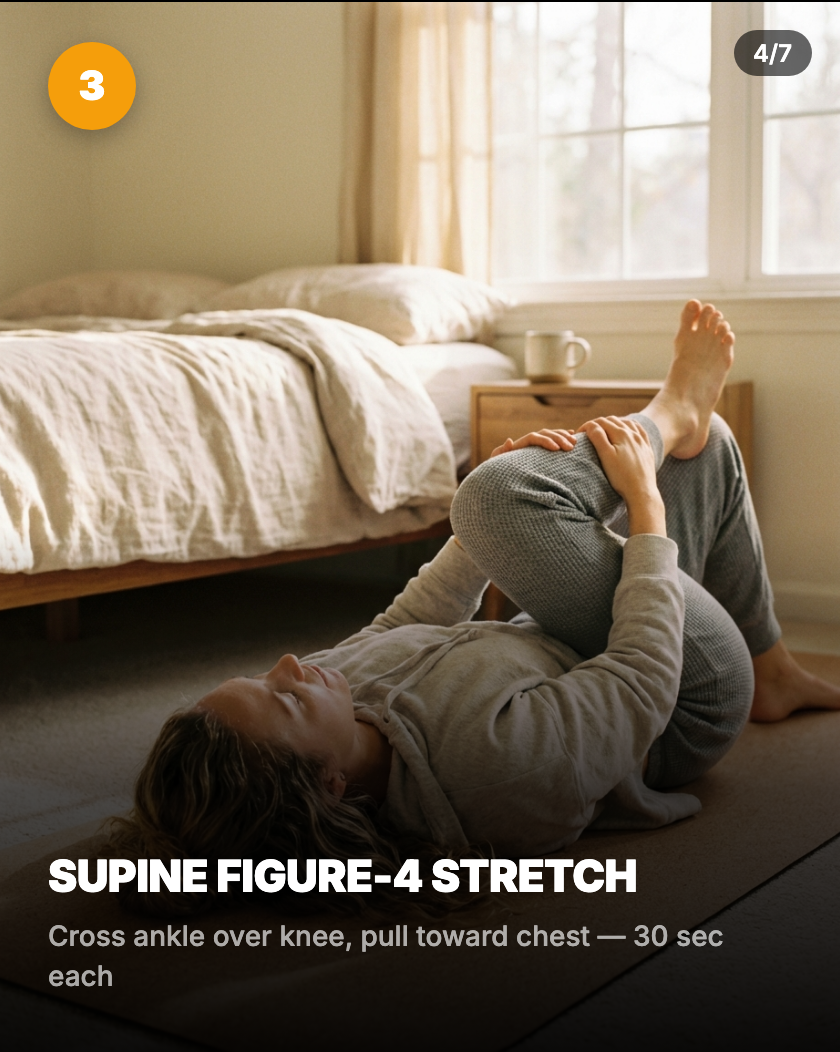
What it helps with Targeting the piriformis and deep external rotators of the hip — the muscles most likely to compress the sciatic nerve in piriformis syndrome.
How to do it
- Lie on your back with both knees bent and feet flat.
- Cross your right ankle over your left knee.
- Thread your hands behind your left thigh and gently pull it toward your chest.
Repetitions Hold for 30 seconds each side. Repeat 2–3 times.
When to stop Stop if the stretch produces sharp pain in the buttock or if symptoms radiate further down the leg.
Cobra Pose (Bhujangasana)
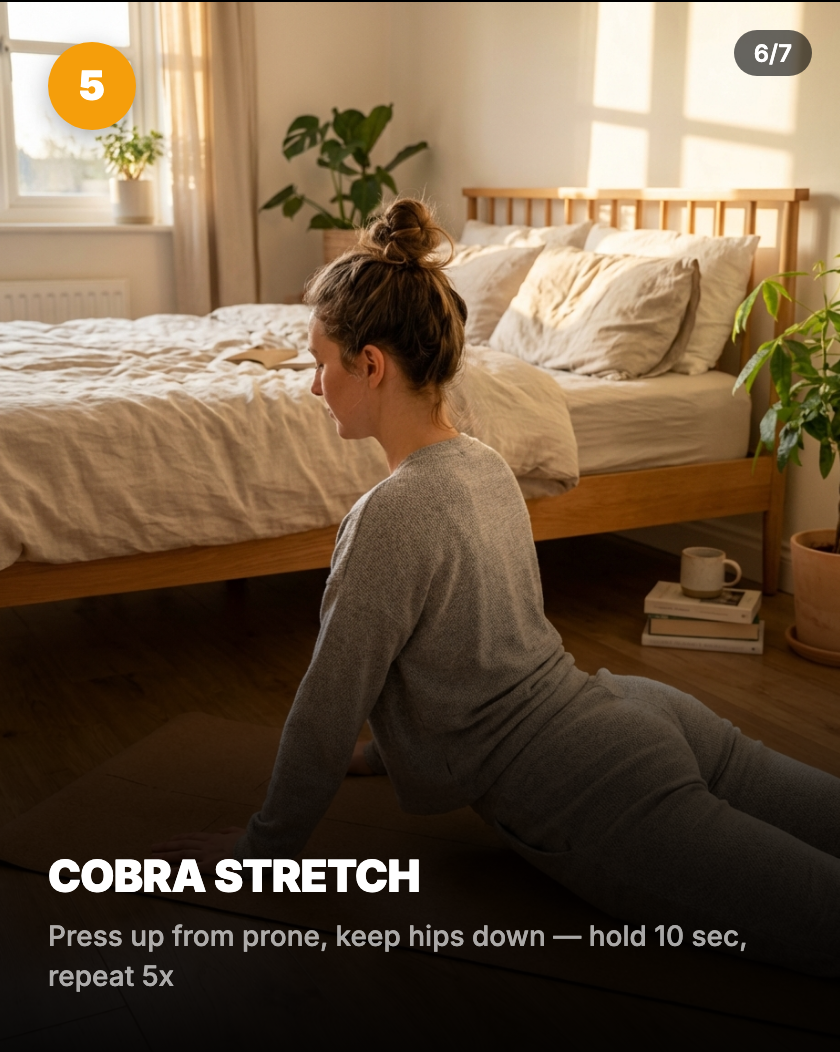
What it helps with Extension-based loading of the lumbar spine, which can help centralize disc-related sciatica symptoms — moving pain from the leg toward the lower back, a positive sign in rehabilitation.
How to do it
- Lie face down with your hands under your shoulders.
- Slowly press your upper body upward, keeping your hips on the mat.
- Hold at a comfortable height — you do not need to fully straighten your arms.
Repetitions Hold for 10 seconds, then lower. Repeat 5 times. Perform up to every 2–3 hours during acute episodes.
When to stop Stop if pain moves further down the leg (peripheralizes) or if you feel sharp, worsening pain in the lower back.
Deeper Hip Openers
Progress to these once your acute symptoms have settled and the gentle poses feel comfortable.
Pigeon Pose (Eka Pada Rajakapotasana)
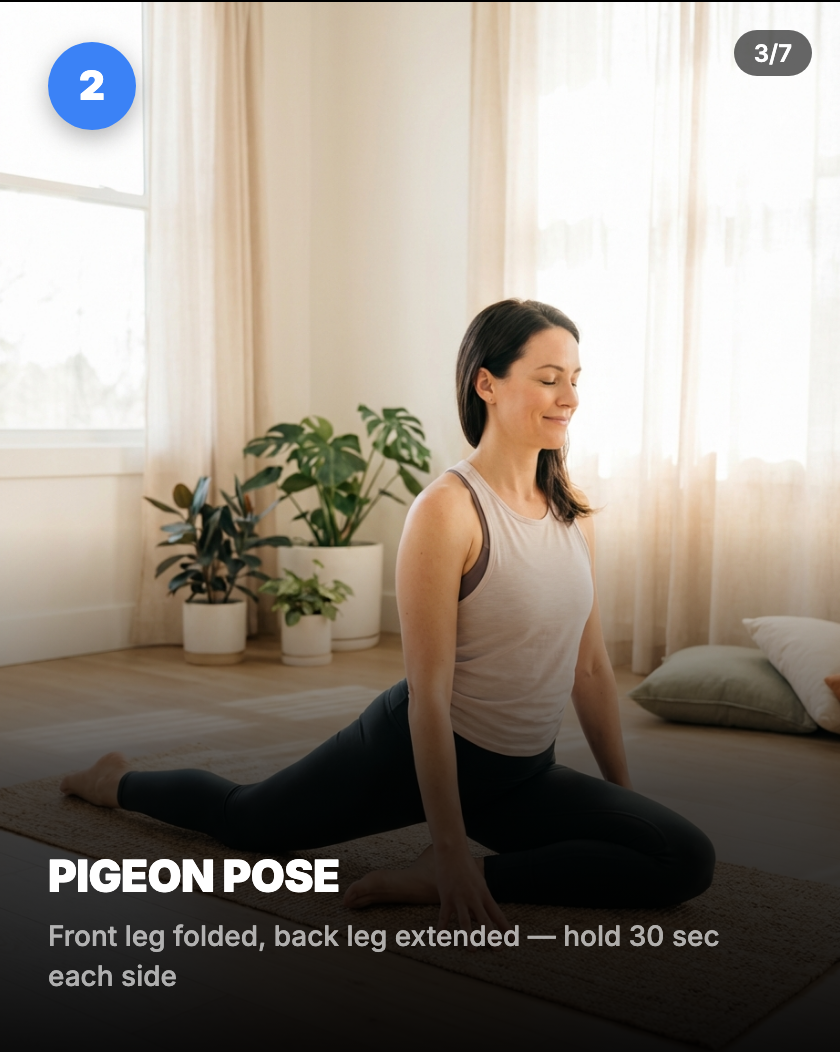
What it helps with A deep stretch for the piriformis, hip flexors, and external rotators — making it one of the most effective yoga poses for addressing the muscular component of sciatica.
How to do it
- From a tabletop position, bring your right knee forward and place it behind your right wrist.
- Extend your left leg straight behind you, keeping your hips level.
- Walk your hands forward and lower your upper body over your front leg.
Repetitions Hold for 30–60 seconds each side. Use a blanket or block under the hip of the front leg if needed.
When to stop Stop if you feel knee pain on the front leg, or if the stretch triggers shooting pain down either leg.
Low Lunge with Twist (Parivrtta Anjaneyasana)
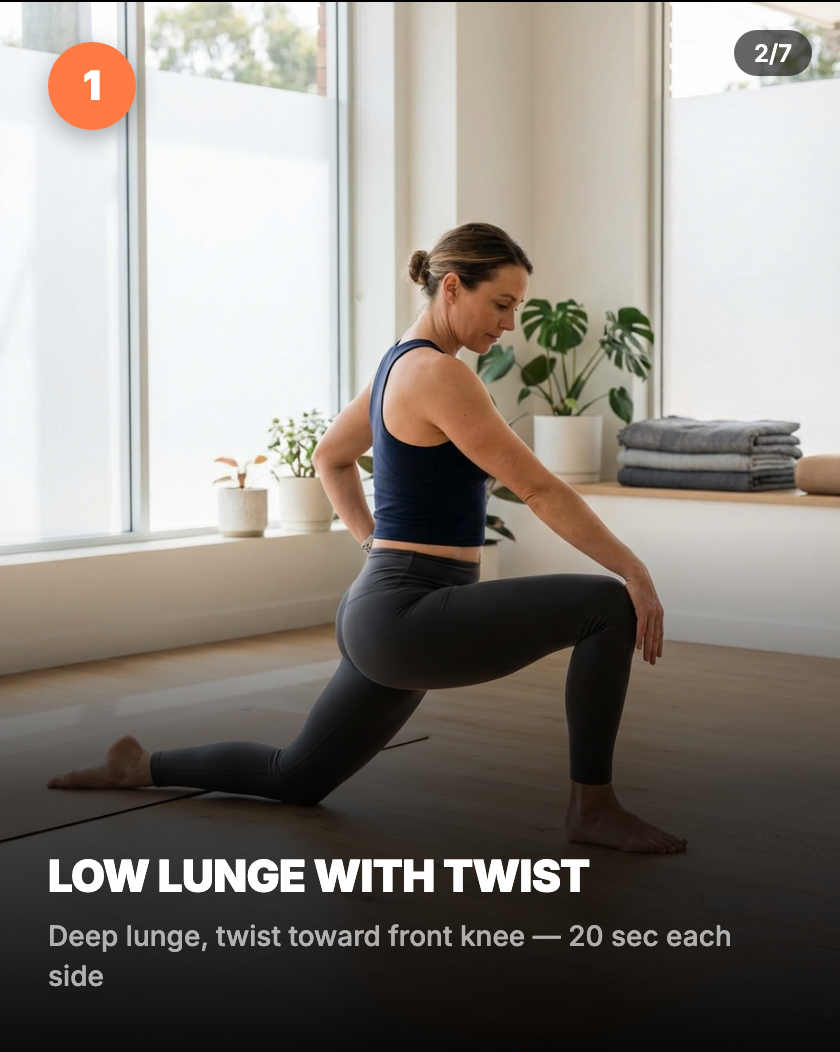
What it helps with Combining hip flexor lengthening with thoracic rotation — addressing two common contributors to sciatica: tight hip flexors from prolonged sitting and restricted spinal mobility.
How to do it
- Step into a deep lunge with your back knee on the mat.
- Place both hands on the inside of your front foot.
- Slowly twist your torso toward your front knee, reaching one arm upward.
Repetitions Hold for 20–30 seconds each side. Repeat 2 times.
When to stop Stop if the lunge position increases pressure in the lower back or if the twist aggravates leg symptoms.
Butterfly Stretch (Baddha Konasana)
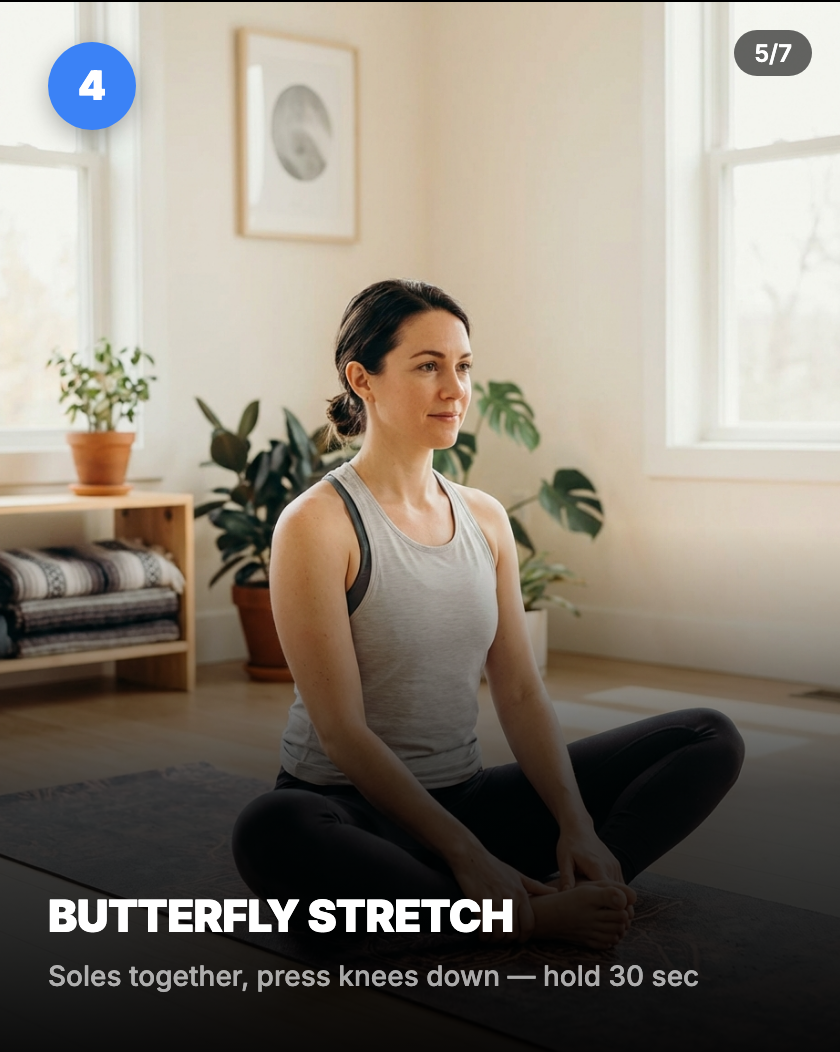
What it helps with Opening the inner thighs and groin while gently stretching the hip adductors — muscles that, when tight, can alter pelvic alignment and contribute to sciatic nerve irritation.
How to do it
- Sit tall with the soles of your feet together and knees falling outward.
- Hold your feet with both hands and sit as upright as possible.
- Gently press your knees down with your elbows for a deeper stretch.
Repetitions Hold for 30–60 seconds. Repeat 2 times.
When to stop Stop if you feel sharp pain in the groin or if sitting upright causes lower back discomfort. Sit on a folded blanket to elevate your hips if needed.
Poses to Avoid with Sciatica
Not all yoga is appropriate during a sciatica flare-up. Avoid or modify these until symptoms have resolved:
- Full forward folds (Uttanasana, Paschimottanasana) — deep lumbar flexion can increase disc pressure on the nerve
- Seated twists with forced rotation — aggressive twisting can compress the nerve root
- Shoulderstand and Plow Pose — heavy spinal flexion under load
- Any pose that peripheralizes symptoms — if pain moves further down the leg, stop immediately
For a comprehensive list, see our guide on sciatica exercises to avoid.
Building a Yoga Routine for Sciatica
Acute phase (weeks 1–2):
- Cat-Cow → Child's Pose → Supine Figure-4 → Cobra
- 10–15 minutes, once or twice daily
Recovery phase (weeks 2–6):
- Add Pigeon Pose, Low Lunge with Twist, Butterfly
- 20–30 minutes, daily
Maintenance phase (ongoing):
- Full sequence including deeper hip openers
- 30 minutes, 3–5 times per week
A 2025 randomized controlled trial (Saleem et al.) studying yoga and mindfulness-based approaches for chronic low back pain found that mind-body interventions improved pain intensity, functional disability, and quality of life — with benefits sustained at 24-week follow-up (PMID: 40510459).
Recovery Timeline
Most sciatica episodes improve within 4–8 weeks. Yoga can support every stage:
- Weeks 1–2: Gentle poses only — Cat-Cow, Child's Pose, Supine Figure-4
- Weeks 2–4: Introduce Cobra and mild hip openers as tolerated
- Weeks 4–8: Progress to deeper stretches and longer holds
For more exercise options beyond yoga, see our full guide on sciatica exercises. For immediate pain management strategies, visit our sciatica pain relief guide.
Summary
Yoga offers a structured, low-impact approach to managing sciatica that combines stretching, strengthening, and mindful movement. Start with gentle poses during acute pain, progress to hip openers as symptoms allow, and avoid deep flexion until you are fully recovered. Consistency matters more than intensity — a short daily practice is more effective than occasional long sessions. If your symptoms persist beyond 6–8 weeks or worsen, consult a physiotherapist for individualized guidance.